
Women Empowerment in GCC: Building Confident, Future-Ready Careers in the UAE and Beyond
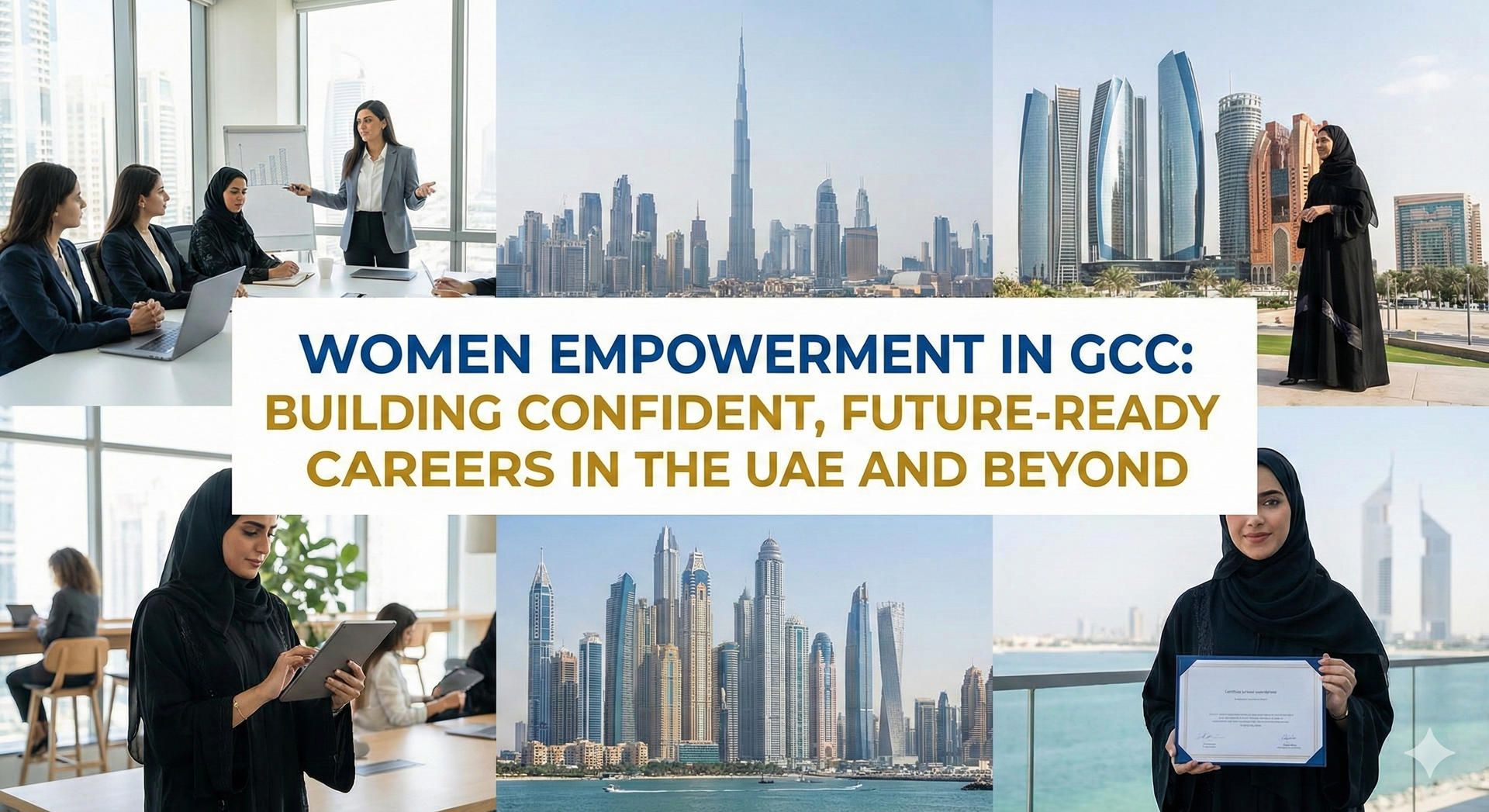
Women Empowerment in GCC: Building Confident, Future-Ready Careers in the UAE and BeyonWomen empowerment in GCC is no longer a peripheral conversation—it is a defining force shaping how careers are built, advanced, and rewarded across the UAE, Saudi Arabia, and the wider Gulf. From boardrooms in Dubai to innovation hubs in Riyadh and Abu Dhabi, women professionals are entering leadership pipelines, high-growth sectors, and policy-backed career programs at an unprecedented scale.
From personally guiding over 5,000 UAE professionals into new roles during 2025–2026, a clear pattern has emerged: women who understand local hiring realities, ATS behavior, cultural nuance, and government initiatives move faster—and further—than those relying on generic global advice.
This long-form guide is written for ambitious women at different career stages—fresh graduates, returning professionals, mid-career specialists, and senior leaders—who want to build credible, high-impact careers in the GCC with clarity and confidence. Every section is grounded in recruiter insight, UAE labor frameworks, and real market behavior relevant for 2026 and beyond.
The Reality of Women Empowerment in the GCC Job Market
Progress Is Structural, Not Symbolic
Across the UAE and Saudi Arabia, women empowerment is embedded into national workforce strategies. In the UAE, Emiratisation targets, public-sector leadership mandates, and professional-development funding have created tangible pipelines. Saudi Arabia’s Vision 2030 has similarly expanded women’s participation in finance, tech, engineering, and public administration.
Yet empowerment does not eliminate competition. Hiring remains performance-driven, ATS-filtered, and outcome-focused. Women who succeed consistently combine policy awareness with personal branding, negotiation skill, and role-specific positioning.
Recruiter Insight: What Actually Drives Shortlists
Recruiters across Dubai and Abu Dhabi consistently prioritize:
- Role-specific achievements over generic responsibilities
- Evidence of leadership, even without formal titles
- ATS-friendly CV structure aligned with job descriptions
- Cultural and stakeholder adaptability in GCC environments
This is where many capable women lose momentum—not due to skill gaps, but positioning gaps.
Women in Leadership: Breaking Barriers in the UAE & Saudi Corporate World
Leadership Pathways That Work in the Gulf
Leadership in the GCC is built through trust, continuity, and stakeholder confidence. Women leaders who advance fastest typically:
- Demonstrate long-term organizational commitment
- Translate results into business or policy impact
- Navigate multicultural teams with emotional intelligence
In the UAE, semi-government entities and large groups increasingly promote women into director, VP, and policy advisory roles, particularly in HR, finance, sustainability, education, and healthcare.
Practical Strategy for Aspiring Women Leaders
- Position leadership impact clearly on your CV (budgets, teams, transformations)
- Optimize LinkedIn headlines for decision-maker visibility
- Prepare for panel-style interviews common in public and semi-government hiring
Professional leadership CV structuring is often decisive—explore tailored support via https://www.labeeb.ae/professional-cv-writing.
Top Careers for Women in the GCC: High-Growth Roles for 2026
Sectors With Strong Momentum
Women empowerment in GCC hiring is most visible in:
- Technology & AI (data, product, cybersecurity, AI governance)
- Healthcare & Life Sciences
- Finance, Compliance & ESG
- Education, Training & Policy
- Sustainability & Renewable Energy
These sectors align closely with UAE Vision 2031 and regional diversification goals highlighted by entities like World Economic Forum and International Labour Organization.
Salary Reality Check
High pay follows specialization + relevance. Generalist profiles plateau quickly; specialists with regional exposure scale faster.
Balancing Career & Family: Expat Women Success Patterns in Dubai
The Myth of “Either/Or”
Dubai’s professional ecosystem increasingly supports:
- Hybrid roles
- Outcome-based performance
- Project and consultancy models
Women who negotiate scope and flexibility early experience higher retention and faster re-entry after life transitions.
Re-Entry Strategy After Career Breaks
- Address gaps confidently (skills gained, certifications, consulting)
- Update ATS keywords to match current market demand
- Rebuild visibility through LinkedIn content and networking
Targeted re-entry CVs and cover letters matter—see https://www.labeeb.ae/cover-letter-writing-services.
Emirati Women Empowerment: Nafis, Tawazun & National Opportunities
For Emirati women, empowerment is policy-backed and priority-driven. Programs such as the Nafis platform and Tawazun initiatives provide:
- Salary support
- Private-sector placement incentives
- Upskilling pathways
Official guidance is available via the UAE Government portal UAE Government Portal and labor updates from Ministry of Human Resources and Emiratisation.
Gender Pay Gap in the UAE: Facts, Trends & Negotiation Tactics
What the Market Actually Shows
While the UAE enforces equal pay for equal work, disparities persist due to:
- Negotiation behavior
- Initial salary anchoring
- Role scoping differences
Negotiation Framework That Works
- Benchmark roles using data from Glassdoor and PayScale
- Present value, not need
- Anchor discussions to outcomes and scope
Negotiation readiness is a core component of https://www.labeeb.ae/interview-preparation.
Networking for Women Professionals Across the GCC
Relationship-Driven Advancement
In the GCC, trusted referrals outperform cold applications. Effective networking focuses on:
- Industry-specific events
- Professional women’s forums
- LinkedIn thought leadership
Platforms like LinkedIn remain essential, but success depends on profile credibility and consistent engagement.
Women in Tech & AI: A GCC Growth Story
Governments across the Gulf actively sponsor women in:
- AI ethics and governance
- Data analytics
- Product management
- Cybersecurity
This aligns with global trends tracked by Harvard Business Review and regional digital transformation agendas.
Women entering tech roles benefit from clear portfolio presentation and keyword-optimized CVs tailored for ATS systems used by large employers.
Personal Branding for Women in Male-Dominated Fields
What Works in the GCC
- Authority over volume
- Measured confidence
- Results-driven storytelling
Your CV and LinkedIn profile must reinforce the same narrative. Strategic profile optimization is available via https://www.labeeb.ae/linkedin-profile-optimization.
Mentorship Programs for Women in the UAE
Mentorship accelerates decision-making and visibility. Look for:
- Employer-sponsored programs
- Industry associations
- Government-backed initiatives
Public-sector and semi-government roles are frequently listed on portals like Dubai Careers and Abu Dhabi’s TAMM platform.
UAE-Specific Hiring & Compliance Insights
- ATS screening is standard across large employers
- Cultural fit and long-term intent are evaluated implicitly
- Emiratisation policies influence both public and private hiring
Understanding these dynamics reduces friction and accelerates outcomes.
How Labeeb Supports Women Professionals in the GCC
At Labeeb Writing & Designs, our support goes beyond documents. We align career strategy, market reality, and personal positioning—especially for women navigating complex transitions.
Explore:
FAQs: Women Empowerment in GCC Careers
1. Are women-friendly policies consistent across the GCC?
Policies vary, but the UAE and Saudi Arabia lead with structured frameworks and enforcement.
2. Do career breaks reduce employability in the UAE?
No—if addressed strategically with updated skills and positioning.
3. Which sectors offer the fastest growth for women?
Tech, healthcare, finance, education, and sustainability.
4. Is negotiation culturally acceptable in the UAE?
Yes—when data-driven and professionally framed.
5. Do ATS systems disadvantage women?
ATS systems are neutral; poor keyword alignment is the real barrier.
6. Are mentorship programs worth pursuing?
Yes—especially those linked to employers or government entities.
Related Reads
To deepen your understanding, explore these related insights from Labeeb:
- Personal Branding in Dubai: How Your CV and LinkedIn Can Set You Apart – Read More →
- From Employee to Leader: Developing a Growth Mindset in UAE Companies – Read More →
- The Power of Emotional Intelligence in UAE Workplaces – Read More →
- How Hiring Really Works in the UAE Job Market – Read More →
Your Next Step
If you’re ready to translate ambition into measurable career progress, we’re here to guide you—strategically and confidentially.
Contact:
https://www.labeeb.ae/contact
WhatsApp:
https://wa.me/+971522617846