
Women in Tech & AI: Rising Opportunities Across the Gulf in 2026
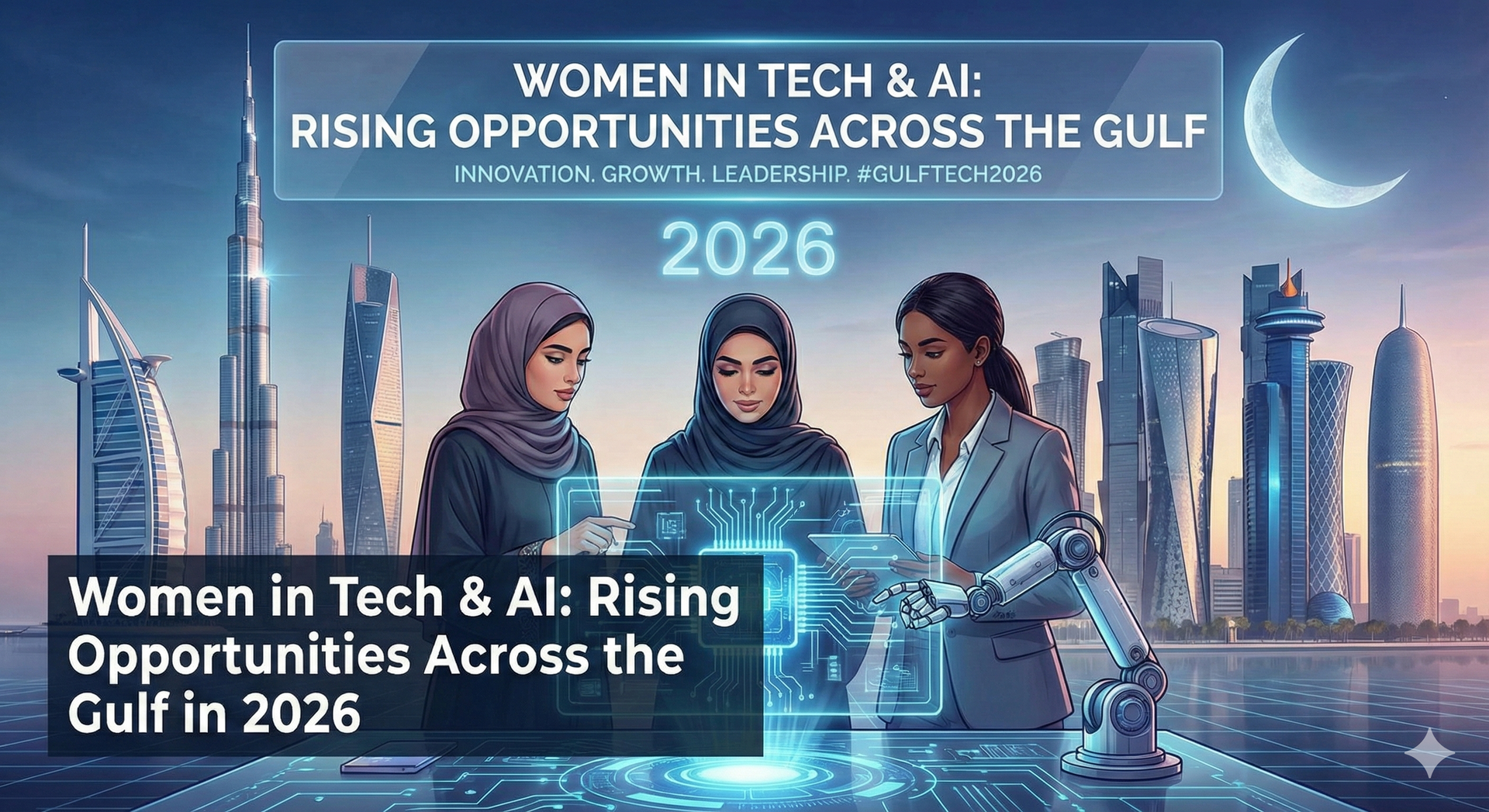
Women in tech and AI across the GCC are no longer entering the conversation—they are reshaping it. From government-backed AI strategies in the UAE to large-scale digital transformation programs across the Gulf, demand for technology, data, cybersecurity, and AI governance skills has outpaced supply. For women professionals, this creates one of the clearest, fastest routes to high-impact, high-paying careers in the region.
From personally guiding 5,000+ UAE professionals during 2025–2026, including a rapidly growing number of women transitioning into tech and AI roles, one reality is clear: the barrier is not opportunity—it is positioning. Women who align skills with GCC priorities, understand ATS-driven hiring, and communicate value confidently are moving into roles that barely existed five years ago.
This guide is written for women at every stage—students, career switchers, mid-career specialists, and senior leaders—who want a realistic, GCC-specific roadmap to succeed in technology and AI careers in 2026 and beyond.
Why Tech & AI Are the Most Strategic Careers for Women in the GCC
Demand Is Policy-Driven, Not Cyclical
Unlike traditional sectors, technology hiring in the GCC is reinforced by:
- National AI and digital strategies
- Government modernization programs
- Smart city and infrastructure investments
- Cybersecurity and data sovereignty requirements
In the UAE, these initiatives align with UAE Vision 2031 and are supported by policy frameworks referenced via the UAE Government Portal.
This means tech and AI demand is long-term, funded, and expanding—not a temporary trend.
How Women Are Entering Tech & AI Roles Successfully
The Myth: “You Must Be a Developer”
In reality, women in the GCC are thriving in both technical and hybrid roles, including:
- Product & program management
- Data analysis and AI operations
- Cybersecurity risk and governance
- UX, digital transformation, and AI ethics
These roles value analytical thinking, communication, and stakeholder management—areas where women often excel.
High-Growth Tech & AI Roles for Women in 2026
1. Data Analytics & Business Intelligence
Why It’s Hot
Every organization is now data-driven—but most lack professionals who can translate data into decisions.
Common roles:
- Data Analyst
- BI Specialist
- Analytics Consultant
Salary Outlook (UAE):
AED 25,000–45,000/month for mid-to-senior professionals.
2. Artificial Intelligence & Machine Learning (Non-Coding Paths Included)
Women are increasingly visible in:
- AI product ownership
- Model governance & validation
- AI ethics and policy
These roles sit at the intersection of technology, regulation, and business.
Global trends tracked by World Economic Forum show AI governance and ethics as some of the fastest-growing professional domains.
3. Cybersecurity & Digital Risk
Why Women Are Succeeding Here
Cybersecurity in the GCC is no longer just technical—it is enterprise risk management.
Women are advancing into:
- Cyber risk management
- Information security governance
- Compliance & resilience roles
Salary Outlook:
AED 30,000–55,000/month for experienced professionals.
4. Product, Program & Transformation Management
Digital transformation projects across the Gulf require leaders who can:
- Coordinate cross-functional teams
- Translate business needs into tech solutions
- Deliver outcomes under tight timelines
Women with consulting, operations, or project backgrounds transition particularly well here.
5. UX, Digital Experience & Human-Centered AI
As AI adoption increases, so does the need for:
- User experience strategy
- Accessibility and inclusion design
- Human-centered AI frameworks
These roles are increasingly funded in government and semi-government programs.
Government & Semi-Government Tech Opportunities for Women
Why Public-Sector Tech Roles Matter
Government and semi-government entities offer:
- Strategic-scale projects
- Stability with innovation exposure
- Clear leadership pathways
Tech roles are frequently advertised via portals such as Dubai Careers and Abu Dhabi’s TAMM ecosystem.
Private Sector vs Government: Where Should Women Aim?
Private Sector Advantages
- Faster salary growth
- Exposure to global systems
- Rapid skill development
Government & Semi-Government Advantages
- Predictable progression
- Policy influence
- Long-term career security
Many women build skills in the private sector, then transition into senior public-sector roles.
Salaries & Career Progression in Tech & AI
What Drives Pay in the GCC
Compensation is influenced by:
- Skill scarcity
- Role criticality
- Project scale
- Leadership readiness
Unlike other sectors, negotiation leverage is high due to talent shortages.
Market benchmarking often references data from platforms like PayScale and Glassdoor.
ATS & Hiring Reality for Women in Tech
Why Many Qualified Women Are Filtered Out
Common issues include:
- Generic job titles
- Missing modern keywords
- Understated achievements
- Overly academic profiles
Most GCC employers use ATS systems before recruiter review. If your CV isn’t aligned, you won’t be seen.
Professional ATS alignment support:
https://www.labeeb.ae/professional-cv-writing
How Women Can Transition Into Tech Without Starting Over
Step-by-Step Transition Framework
- Identify transferable skills
- Choose a tech-adjacent role
- Upskill selectively (not excessively)
- Reframe experience, don’t replace it
- Optimize CV and LinkedIn for target roles
This approach consistently outperforms “start from scratch” strategies.
LinkedIn Visibility for Women in Tech & AI
Recruiters actively scout women in tech via LinkedIn.
High-performing profiles:
- Use role-specific headlines
- Showcase projects and outcomes
- Demonstrate continuous learning
Professional optimization:
https://www.labeeb.ae/linkedin-profile-optimization
Cultural & Workplace Nuances Women Should Know
- Confidence must be evidence-based
- Collaboration is valued over ego
- Leadership potential is assessed early
- Clear communication builds credibility
These nuances strongly influence promotion and pay outcomes.
Common Mistakes Women Make in Tech Careers
- Over-investing in certifications without positioning
- Under-communicating achievements
- Avoiding negotiation
- Staying too long in support roles
- Neglecting visibility
Each mistake is fixable with the right strategy.
How Labeeb Supports Women in Tech & AI Careers
At Labeeb Writing & Designs, we help women:
- Transition into tech and AI roles
- Build ATS-ready, tech-aligned CVs
- Optimize LinkedIn for recruiter visibility
- Prepare for technical and behavioral interviews
Our integrated services:
- https://www.labeeb.ae/cover-letter-writing-services
- https://www.labeeb.ae/interview-preparation
- https://www.labeeb.ae/packages
- https://www.labeeb.ae/expert-career-support
FAQs: Women in Tech & AI in the GCC
1. Do I need coding skills to work in AI?
No—many high-impact roles are non-coding.
2. Are tech salaries higher than other sectors?
Yes, especially for in-demand skills.
3. Is the GCC welcoming to women in tech?
Increasingly so, backed by policy and demand.
4. Can I transition from a non-tech background?
Yes, with strategic positioning.
5. Are government tech roles innovative?
Yes—often at national scale.
6. Does LinkedIn matter in tech hiring?
Absolutely—it’s a primary sourcing tool.
Related Reads
To deepen your strategy, explore:
- AI Powered Careers in the UAE: Top Roles to Target in 2026 – Read More →
- Top Paying Jobs in the UAE: Industries Hiring Right Now – Read More →
- Personal Branding in Dubai: How Your CV and LinkedIn Can Set You Apart – Read More →
- How Hiring Really Works in the UAE Job Market – Read More →
Your Next Step
If you’re ready to enter or accelerate a tech or AI career in the GCC, expert positioning can shorten the journey dramatically.
Contact:
https://www.labeeb.ae/contact
WhatsApp:
https://wa.me/+971522617846